
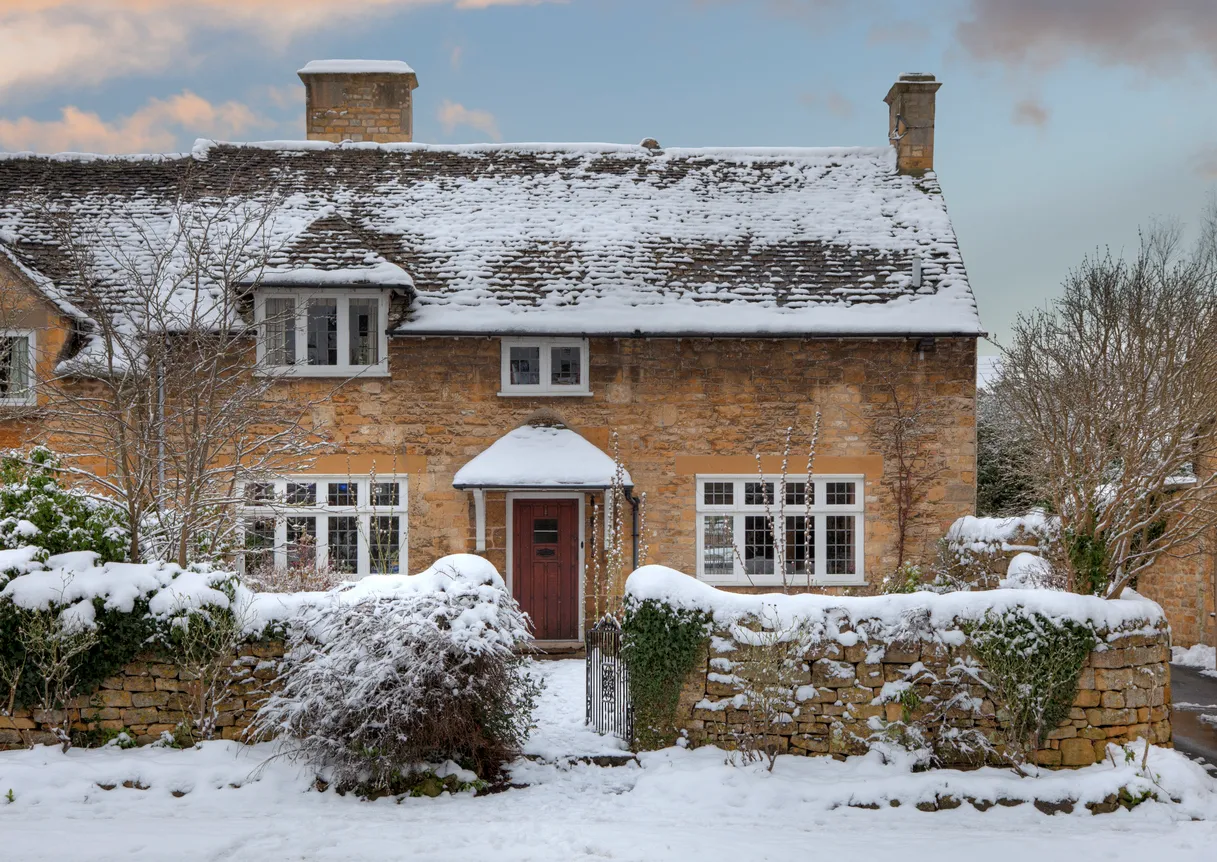
Over winter your holiday home will be unoccupied for long periods and exposed to harsh weather. By implementing a few simple precautions, you can avoid unnecessary damage (and costs) to your holiday cottage.
Below you will find a range of tips we have put together to prepare and protect your holiday home to ensure it is safe, secure and clean when you return in the spring.
Preventing water damage in your holiday home
When the temperature drops in winter, there is an increased risk of frozen pipes, which can burst in unoccupied holiday cottages. A burst pipe can be catastrophic, causing thousands of pounds in damage and major inconvenience. Escape of water is one of the most common and expensive home insurance claims.
To reduce the risk of an escape of water claim, drain down the heating system and shut off the water supply so that there is no residual water in the pipes, which could freeze. Turning off the water is not enough – you need to drain down to remove the threat of burst pipes and water damage entirely when your holiday home is left empty for long periods.
If the water is not drained, leaving the heating on (10-12 degrees) will considerably reduce the risk of burst pipes.
Using a smart thermostat can make your heating more efficient and allow you to turn the heating up remotely during cold snaps.
Insulate pipes and water tanks.
Drain the toilet cisterns by flushing, then pour a cup of salt down the toilets and plug holes to prevent residual water freezing.
Read our blog on how to prevent frozen pipes and bursts.
Appliances, utilities and plumbing
Put neat bleach in the toilet and cover the toilet with cling film. This slows down evaporation and keeps it clean.
If you need to leave the power on, then unplug all unused electronic equipment to avoid the risk of fire and lightning strikes.
Empty and clean the fridge/freezer, turn it off and leave the doors open.
Also, remember to turn the gas off during long absences.
No one wants to be stuck without heating in the middle of winter. Have your boiler serviced before the colder months to avoid any potential problems.
If your property is heated by oil, make sure there is enough fuel for the winter period. Your supplier should also be able to tell you what additional precautions you should take during very cold weather to prevent oil gelling/freezing and blockages.
Avoiding damp
Condensation and damp leads to mould, which is not only a health hazard but can also ruin soft furnishings and leave unsightly marks on walls. To reduce the risk of returning in the spring to surface mould, try these tips:
Electric dehumidifiers are ideal to extract moisture from the air. Use one that automatically switches off when it needs emptying or one that allows the water to flow into a shower tray, sink etc.
Install bathroom extractor fans with humidity sensors.
Alternatively, leave portable dehumidifier boxes around your holiday home to absorb moisture. As a cheaper alternative put bowls of salt around your property or cat litter in a tray. This soaks up excess moisture in the air to reduce dampness.
Ventilation is one of the best ways to prevent excessive moisture from building up and avoiding dampness. Leave doors open between rooms so air can circulate. Ideally, every month, open the doors and windows for an hour or so to let some fresh air in on a dry day.
Leave curtains open on south-facing windows to naturally warm your property.
Buy some cheap bed sheets and lay them over furniture and furnishings to prevent mould.
Pull your furniture away from walls to let air circulate.
Use vacuum bags to store bedding, cushions etc.
Again, leaving the heating on low can help tackle condensation, prevent excessive moisture from building up and avoid damp.
How to keep your holiday cottage secure over winter
Burglaries typically spike by a third after the clocks go back and the winter nights become darker. Unoccupied holiday cottages are an easy target. However, these preventative steps can help reduce the likelihood of burglaries and squatters.
Securely store outdoor furniture and loose items from the garden in a garage or shed. Leave nothing outdoors that can be blown about by strong winds or be stolen.
Strong winds can cause branches or even entire trees to fall and damage to your holiday home. If there are trees near your property have a risk assessment conducted by a qualified tree surgeon and undertake any recommended work.
Check that all your windows, doors and skylights are locked and weather-tight when you leave to prevent unauthorised access or water ingress.
Ensure that garages, outbuildings and sheds are well-maintained, secure, weather-tight, and that gates and fencing can withstand the winter winds.
Install smart devices such as CCTV cameras, motion sensors and heat/flood detectors that can be managed remotely to monitor risks.
Set interior lights on a timer to make it look like someone is home. Also, install motion-triggered lighting for the exterior of the property as a deterrent.
Valuables on show can be enough to entice opportunistic criminals – keep them out of sight.
A burglar alarm deters most opportunist thieves and if triggered, it can notify neighbours that the property may have been broken into.
Ask a neighbour, your property manager or letting agent to inspect your empty holiday home for damage or maintenance issues regularly, especially after bad weather. This will help to minimise property damage.
More winterising tips:
Food attracts vermin so try to avoid leaving any food items, thoroughly clean and tidy the property to help avoid attracting pests. Any food that is left in the property should be locked in metal containers with tight lids. Inspect the loft and look for droppings, smells, and evidence of gnawing or chewing.
You can never rule out the chance of damage completely, but you can take steps to reduce the likelihood of it happening. Here is a checklist of essential winter maintenance tasks holiday home owners should do.
Make a checklist of all the things you’ve done, so when you return, you’ll remember all the things that have to be “undone”.
Check your insurance cover
More than half of Britons fail to read the terms and conditions of their insurance policy. Your holiday home is at the most risk when it’s left empty. If you are leaving your holiday home unattended for a long period over winter, you should check your insurance for any unoccupancy restrictions and winter warranties.
Do you have to:
Drain down the heating system
Maintain a minimum temperature
Increase security
Inspect the holiday home regularly
These requirements could void your insurance coverage if you don’t fulfil your obligations as a policyholder. You should also be aware that Insurers are unlikely to pay for claims that are due to poor maintenance and wear and tear.
By keeping your holiday home well-maintained and following these tips when you lock it up for winter, you are reducing the risk of damage and costly repairs.
Specialist Holiday Home Insurance through Schofields
Once your holiday home is ready for the winter period, you may want to consider specialist holiday home insurance through Schofields. Specialist holiday home insurance through Schofields can help provide financial protection for you and your holiday let. Get a quote online today.
Please note the information provided on this page should not be taken as advice and has been written as a matter of opinion. For more on insurance cover and policy wording, see our homepage.