
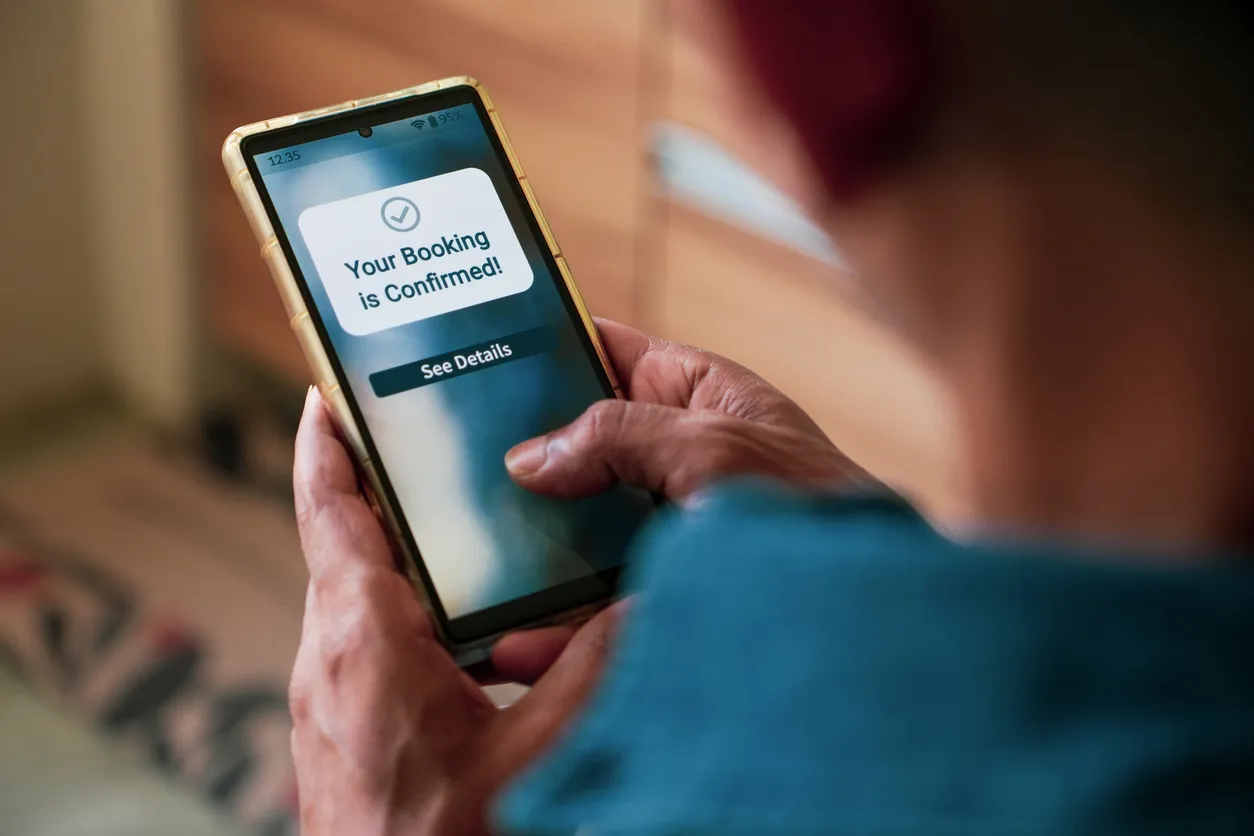
The internet has revolutionised how we book holidays, and it’s easy to be drawn in by the lure of a great deal. However, if the price is too good to be true it invariably is.
Scammers are ramping up their efforts by using sophisticated and convincing methods to trick travellers into paying for non-existent holidays. According to Action Fraud, in 2024 victims lost a total of over £11 million to holiday fraud with the average loss per victim being £1,851.
Often victims do not realise they have been scammed until the fraudster stops replying to messages, or worse, victims arrive at the holiday accommodation to discover there’s no booking or the villa does not exist.
If you’re planning on booking a holiday, we’ve listed the most common holiday booking scams and how you can avoid them.
The different types of holiday booking scams
Phishing
Phishing scams occur when holiday let hosts are sent an email or text that appears to be legitimate, encouraging them to click on a link to log into their listing site account. The link usually takes them to a fake website which collects password details.
Alternatively, hosts are tricked into opening an email attachment which is a computer virus.
The scammers then gain access to the host’s listing site account, change the payment details and lure guests into paying by bank transfer off the booking site’s platform where there’s no protection.
Fake accommodation deals
Scammers post accommodation adverts on Facebook Marketplace with enticing deals such as “due to a recent cancellation, there’s 25% off”. The victims are given plenty of reassurance that the deal is legitimate, such as telephone calls with the alleged property owner, booking confirmation emails and photos of the property. Some scammers have even offered to arrange a birthday cake on arrival.
Once payment is made phone calls go to voicemail, emails are not replied to and it becomes evident that the advert was a scam.
Fake listings
Some scammers create fake adverts on listing sites such as Airbnb, often properties are much cheaper than others in the area. Unsuspecting guests are directed off the listing site to complete the booking, with a further discount offered if payment is made by bank transfer.
Cloned websites Scammers copy photos and information from genuine holiday rental websites onto a fake website. Again, deals such as a discount and free cancellation are used to lure travellers in. It’s only once there’s no response to emails and calls that guests realise they’ve been ripped off.
How to avoid holiday booking scams
To avoid being caught out by a holiday booking scam, follow these tips to protect yourself.
Is it too good to be true?
When you are caught up in the excitement of booking a holiday, especially when there isn’t a lot of availability, it’s easy to get lured in by a bargain and last-minute deal. Scammers often create a sense of urgency to prevent victims from thinking logically.
If a villa is advertised at half the going rate and has lots of availability in peak season when everywhere else is booked up, then it could be a scam and you need to do some further research. The same applies if a big discount is offered to pay quickly, an unusually high deposit is required or a promise to cancel anytime for a 100% refund.
If the deal seems too good to be true – then it probably is.
Don’t be directed away from a trusted listing site
Some fraudsters try to lure consumers away from booking platforms such as Vrbo and Airbnb with a better deal to book direct and pay via a bank transfer.
Transactions and communications should always occur through the listing sites secure booking system to ensure guests’ payments are protected.
Is the website fake?
Before booking direct, travellers should check the authenticity of a website. Be wary of websites containing multiple typos, information that is out of date and amateur photographs.
Do a whois lookup by entering the website address in the search box. This shows details of who owns the website (unless they have opted to hide their personal details). Does it match the owners’ details provided to you? How long has the website domain name been registered? If it’s only a few weeks be cautious.
You can also try a reverse image search using the Google Chrome Browser. Right-click on the image and choose ‘search Google for image’. If you find the same photo being used for several different listings and the host details are different, it could be a scam.
Ask the host questions
Asking the host questions about the location can help reassure you that the holiday home is genuine. Ask them questions that aren’t directly related to the property. Such as, can they recommend any good restaurants or local beaches? What do they suggest for a day out? Where’s the closest supermarket? Genuine rental owners will be happy to oblige and share their knowledge. If they provide vague responses to your questions, proceed with caution.
Give them a call
Can you easily reach the host? Scammers are known to make excuses as to why they can’t talk on the phone. If the property owner is avoiding your phone calls or doesn’t display a contact number on their website, then again, proceed with caution.
Read reviews
Check for previous guest feedback and look out for fake or a lack of reviews as this could be another red flag. Read negative reviews, as they can alert you if there is something dubious about a property. However, don’t be put off if there are a few slightly negative reviews amongst lots of 5* ones. It’s how the owner responds to the reviews that matters and if they resolved the issue.
Some listing sites also allow guests to review the host, not just the holiday let.
Check out the location
When booking direct, check out the house using Google Maps and Street View. Do the website photos and description match the images on street view? Although some owners will be unwilling to disclose the location openly on their website, there should be no problems getting it at the booking stage when the owner knows you are serious about booking.
Are they experienced?
If you book via a listing site such as Vrbo.co.uk or Airbnb.co.uk, the listing shows how long the owner has been advertising on the site. The length the advertiser has been on the site is usually a good indicator of the owners’ experience. The longer the better.
Is there a rental agreement?
The host or property manager should send you a rental agreement before you book. This outlines the terms and conditions of the booking and house rules. If they don’t then this is another warning sign.
Are they active on social media? Most owners have social media profiles to promote the property and local area. If the posts get shares, likes and comments from past guests, this is a positive sign.
What is the safest way to pay when booking a holiday?
The level of protection you have depends on how you pay for your holiday.
Credit card
Credit cards offer the greatest protection if you are scammed, as you can make a claim against your card provider under Section 75 of the Consumer Credit Act. For Section 75 to apply the holiday you paid for must have cost over £100 and not more than £30,000.
Paying by credit card offers the most comprehensive protection from fraud when booking a holiday. If you are booking direct and the holiday home owner doesn’t accept credit cards (they should as it’s easy to set up), make sure you are certain they are genuine.
Debit card
If you pay using a debit card and are scammed, you may be able to request your money back through the banks’ chargeback scheme.
PayPal
Some hosts may take payments via PayPal, which allows you to pay online. PayPal has its own buyer protection scheme – yet according to moneysavingexpert.com it is inferior to Section 75.
Bank transfer
When booking with the owner direct, a bank transfer may be the preferred method of payment. However, once the money transfer has cleared, there is very little consumer protection, and it will be difficult to recover funds in cases of fraud. That’s why scammers request a bank transfer. Once the money goes into their account, they take it straight out and it disappears.
If a bank transfer is the only option, then do extra research as above before you send payment.
Avoid paying for accommodation by currency transfer services like MoneyGram or Western Union as you’ve very little protection if something goes wrong.
What protection do listing sites such as Airbnb and Vrbo offer?
Airbnb
To take advantage of Airbnb’s AirCover hosts and guests must not communicate, share personal contact information, pay, or request payment for a reservation outside of Airbnb’s platform.
Vrbo
When you pay through Vrbo, they protect your rental payment against fraud with their Book with Confidence Guarantee. If you make a payment off the Vrbo platform, your payment isn’t protected.
What to do if you’re the victim of holiday booking fraud
If you have been the victim of an online holiday booking scam:
If you booked via a listing website such as Vrbo or Airbnb then contact them to see if your payment is protected from fraud.
If you paid by credit card, you have protection if things go wrong under Section 75 of the Consumer Credit Act. If you paid by debit card you may be able to reclaim your cash via your card provider’s Chargeback scheme.
If you’ve transferred money into another bank account, you should contact your bank immediately to see if they can recover the funds.
If you’re the victim of a travel-related fraud, report it to Action Fraud (or by calling 0300 123 2040), Trading Standards and Citizens Advice Consumer Service. If you’re in Scotland, report a scam to Advice Direct Scotland on 0808 164 6000 or on the Advice Direct Scotland website.
It’s unlikely that travel insurance will cover booking fraud, but you should check the terms and conditions of your policy just to be certain.
To summarise:
Holiday booking sites are constantly taking steps to reduce booking scams by verifying owners, securing communications and bookings. However, holidaymakers still get caught out.
The safest way for travellers to avoid holiday booking scams is:
Always use your credit card to pay for the booking for maximum protection.
Make sure you are 100% sure the offer and host are genuine before you part with any money – especially if paying via bank transfer.
When using listing sites such as Airbnb or Vrbo, only communicate with owners through the website’s messaging system and pay via the site’s own secure booking portal.
Trust your instincts and don’t get rushed into making impulsive decisions if something doesn’t feel quite right. Properties that look too good to be true usually are.
Specialist Holiday Home Insurance
While you can take steps to mitigate some risks as a holiday homeowner, you may want to consider specialist holiday let insurance through Schofields to help provide financial protection should the worst happen. Get a quote online today.
Please note the information provided on this page should not be taken as advice and has been written as a matter of opinion. For more on insurance cover and policy wording, see our homepage.